Prices are estimates. How we get them

Flake systems that survive a July driveway, solid coats for shops, and metallic floors in finished rooms. The Metroplex works year round. The coating still has to cure.
Call Get a free quoteA Dallas–Fort Worth garage does not get the winter pause a northern floor gets. Cars roll in from a driveway that has been baking, and a soft or cheap coating prints those tires permanently. Hot-tire pickup is the failure local pros plan around, especially on south-facing stalls in Plano, McKinney, and Arlington.
The other local fact is the ground. Expansive clay moves. Slabs crack, and a coating does not stitch a structural crack back together. Local pros fill what should be filled and they tell you when a crack is a foundation conversation instead of a color conversation.
Hail season adds a third job: garages that suddenly have to hold every car the household owns, plus wet carpet and roofing debris. A sealed floor is easier to live with during that month. Send a photo. There is no shop address on this page.
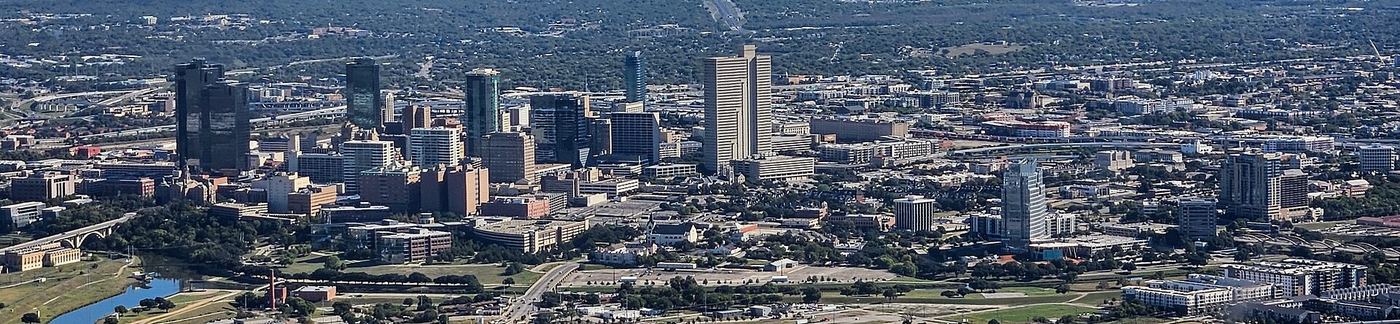
Most DFW requests are attached garages that have chalked or peeled a paint kit. Full-broadcast flake hides clay dust and gives a tire a harder surface than a bargain clear coat.
Grand Prairie and south Fort Worth shops see oil and summer heat with almost no humidity relief. Those floors get a heavier build than a guest bedroom, and local pros talk about ventilation before they talk about gloss.
Metallic floors belong in air-conditioned space: a game room, a showroom, a finished suite. They are a poor match for an unconditioned metal building in August.
Small restaurants and retail bays from Irving to Mansfield need a mopable floor. A local pro can lay a simple walk path.
Covered patios are reasonable. A fully exposed slab in full Texas sun is often a no, because the temperature swing is the enemy of a decorative coat.
Frisco, Celina-adjacent growth, and north McKinney pour slabs and then ask for color immediately. Local pros wait until the concrete is ready. A builder’s schedule is not a cure schedule.
A proper top coat is there so a car that sat in the driveway at 105 degrees does not stamp the floor when it pulls in.
North Texas dust is fine and constant. A sealed floor sweeps. Bare concrete turns it into a paste every time you hose the garage.
When every car moves inside and the roofing crew is in the driveway, a coated slab cleans up. A bare one stains.
These garages are not seasonal storage. The floor is a working surface twelve months, so the system has to match that, not a brochure photo.
These are example flake, metallic, and solid floors from freely licensed photos. They are not documented Dallas or Fort Worth jobs.


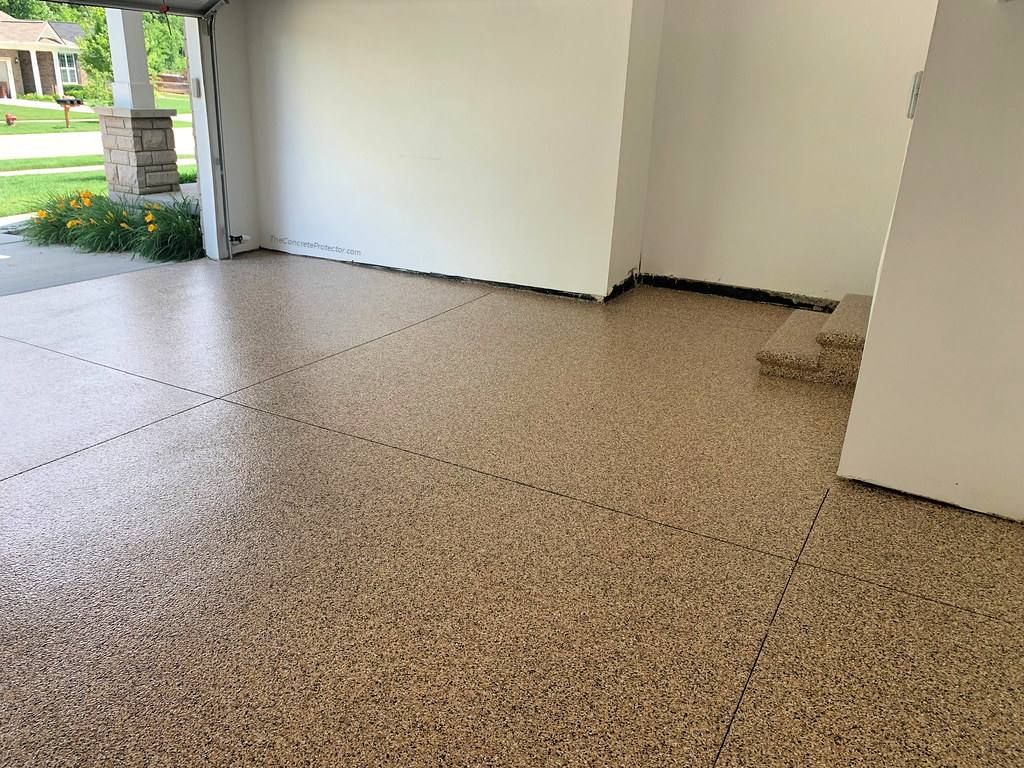
These photos are examples of flake, metallic, and solid systems. They are not claimed as jobs in Dallas–Fort Worth. Color is chosen for your slab.
Full flake is the Metroplex default. It hides dust, shrugs at ordinary stains, and adds grip when a storm blows rain under the door.
Shops and some commercial rooms want a simpler field that can be recoated in a traffic lane later. Gloss is optional. Grip is not.
Metallic pigment needs a stable, conditioned slab. A west-facing garage with no insulation is the wrong room for a marble effect.
Do not drag a trailer jack or a hail-damaged wheel across the new surface. Mats under stands, and a rinse when you track in clay, will keep the gloss longer than any coating slogan.
A new Frisco slab and a 1960s Garland garage fail in different ways. The town pages say which.
Often yes, because the work is indoors. The limit is slab temperature and how soon a hot tire returns. Local pros write that window down.
They peel thin paint. A broadcast system with a proper top coat is chosen specifically so a hot tire does not lift it. Cure time still has to be respected.
Yes. Local pros fill stable cracks. A crack that is opening because the slab is moving needs a different conversation before a decorative coat.
No. Local pros come to the floor. The estimate starts with a photo and the city.
No. They show the kinds of finishes that are possible. Your quote is based on your slab.
A coating can look sound at first and still fail when moisture pushes up through the slab, when tires warm the surface, or when the bond is weak. Peeling, bubbles, soft spots, and tire marks point to different problems. A new color over the old coating usually hides the symptom, not the cause. The failed layers need to be removed before anyone can judge the concrete underneath.
A proper redo takes more than another coat. The crew may need to diamond-grind the entire floor, remove coating residue from edges, open and repair cracks, and test for moisture before choosing a replacement system. If the concrete is still damp or moving, installation may need to wait. Grinding also creates dust and noise, and the garage needs to be cleared so the slab can be worked safely.
The price of a bad installation is paid in labor, disruption, and lost use of the garage, not just in material. Removal can be harder than original preparation, especially if several incompatible layers are bonded together. Ask whether a quote includes removal if the existing coating fails a bond check. Do not accept a new system until the cause of the first failure has been addressed.
A useful quote names the preparation method, the coating layers, and how cracks and joints will be handled. Ask whether the crew plans diamond grinding or acid etching. Grinding cuts the surface and can create a consistent profile; acid etching is less predictable and does not remove old coatings. Ask what concrete surface profile, or CSP, the selected system needs and how the installer will confirm it.
Ask how moisture will be checked and what happens if results exceed the coating maker’s limits. Calcium chloride testing measures moisture emission at the surface, while in-situ relative humidity testing measures conditions inside the slab. They are not interchangeable, and each has a specified procedure. Ask which method fits the system, whether readings will be documented, and whether the crew will stop or change plans if the slab is too wet.
Get the layer sequence in writing: primer if specified, base coat, flake broadcast if selected, and top coat. Clarify whether the quote includes joint work, edge preparation, cleanup, and protection during cure. Ask for the product data sheets and the temperature and humidity limits for installation. The answers should explain how the work fits your slab, not rely on a generic promise that every floor gets the same treatment.
Epoxy is often used as a base coat because it can bond well to properly prepared concrete and gives the installer time to place color or broadcast flake. Its cure depends on the product and site conditions. High slab or air temperatures can shorten working time, while cool or damp conditions may slow cure. The installer should identify the permitted temperature and humidity range before work begins.
Polyaspartic and polyurea products are often selected for top coats or complete systems, but the names do not guarantee a particular result. Some cure quickly, which can make application less forgiving in hot conditions. Ask which layer uses which chemistry, how long the crew has to work with it, and what recoat window applies. A missed recoat window may require additional surface preparation before the next layer bonds.
For a garage exposed to strong sun through an open door, ask about UV stability and the risk of ambering. Some epoxy finishes can change color with UV exposure; a UV-stable top coat may help, but the full system matters. Match texture to use, too: a smoother finish cleans easily, while added slip resistance can help with wet tires and tracked-in rain. Ask how the chosen texture will affect cleaning.
It helps show whether moisture moving through the concrete could interfere with adhesion or cause coating defects. A test is not a guarantee that the slab will stay dry forever. Ask which test method is being used, what the system allows, and how the installer will respond if the result is outside that limit.
No. Calcium chloride testing measures moisture emission at the concrete surface over a test period. In-situ relative humidity testing uses probes in the slab to assess internal conditions. Each method has its own procedure and interpretation. The installer should choose a method appropriate to the coating system and explain the results.
Diamond grinding mechanically removes surface contaminants and creates a profile for a coating to bond to. Acid etching may not remove paint, oil, or other residues and can leave an uneven profile if conditions vary. Ask the contractor how the prepared surface will be checked against the coating system’s required CSP.
No. A crack may be stable or may continue moving, while a control joint is an intentional break that accommodates slab movement. Filling either without understanding its purpose can lead to a visible line or a failed repair. Ask which areas will be filled, which will remain open, and what movement is expected.
Not necessarily. The need for primer depends on the concrete, the coating system, and the manufacturer’s instructions. A primer may be specified to support adhesion or manage surface conditions, but it cannot correct an unprepared slab or uncontrolled moisture. Ask the contractor to explain the layer sequence and why each layer is included.
There is no single wait time for every coating. Foot traffic, light use, and vehicle traffic may have different cure milestones, and temperature and humidity affect them. Get the return-to-service schedule for the exact system in writing. Do not assume that a surface that feels dry is ready for hot tires.
Texture can improve traction, but heavier texture can hold dirt and make mopping harder. The right balance depends on how the garage is used and how often it gets wet. Ask to see or feel a sample, and discuss the planned additive or broadcast, its location, and the cleaning routine it will require.
Sweep or dust-mop grit before it gets ground under tires, and clean spills with a cleaner approved for the coating. Avoid dragging sharp metal equipment across the surface; use protective pads under stands. Follow the installer’s cure instructions before washing the floor or returning vehicles, and ask how to handle future scratches or worn areas.
Send the city, a photo of the concrete, and whether cars bake in the driveway before they park. That last detail changes the top coat.
Dallas–Fort Worth Epoxy Floors is an independent referral service that connects you with local epoxy flooring pros.
Open this site on your phone

Dallas–Fort Worth Epoxy
dallasepoxycoatings.com
Point your phone camera at the code