← Dallas–Fort Worth Epoxy Floors
Frisco garages are often the biggest rooms in a new house, and the concrete under them may still be giving off moisture. A local pro would rather delay a week than blister a floor the week after closing.
Once the slab is ready, full flake is the practical system: these households park inside every day, and the driveway in July is not gentle. Metallic belongs in an interior room, not in the bay that holds the golf cart and the trash bins.
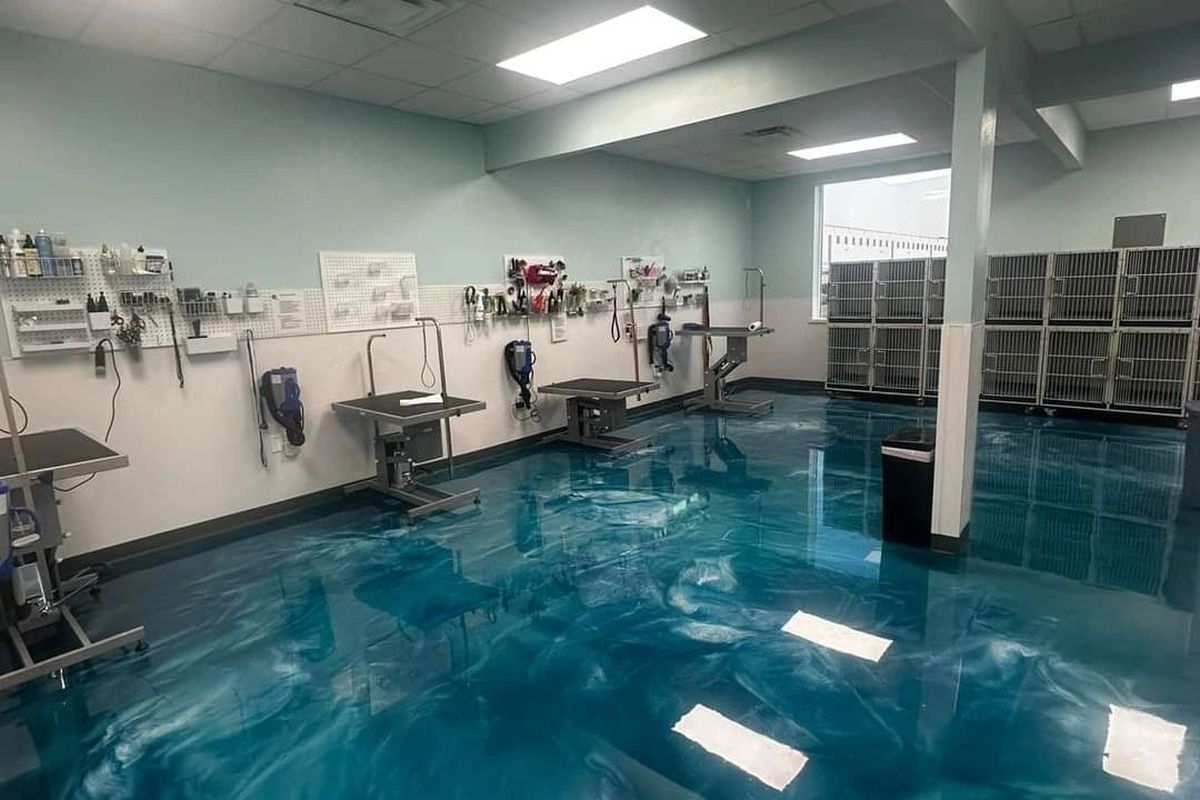
The photo is an example finish, not a documented Frisco job.
Newer Frisco homes can have large garage slabs that look dry while moisture is still moving through the concrete. A coating contractor should check the slab rather than assume its age or appearance means it is ready. Ask what moisture test will be used and how the result will affect the coating plan. A test is useful only when its limits and acceptance criteria are understood.
Calcium chloride testing estimates moisture vapor emission at the surface; in-situ relative-humidity testing measures conditions inside the slab. They are different methods, and the right choice depends on the coating system and site conditions. Ask for the results in writing and ask what happens if they exceed the system’s limits. A moisture-tolerant primer is not a substitute for diagnosing a slab that is too wet.
Moisture is only one part of preparation. Diamond grinding removes weak surface material and creates a mechanical profile, often described by a concrete surface profile, or CSP, range. Acid etching does not reliably produce the same uniform profile and may leave residue. Cracks and control joints also need a clear plan: repairs can reduce edge breakdown, but moving joints should not simply be filled and hidden under a rigid coating.
A useful quote spells out the preparation method, the condition the slab must meet, and how cracks, control joints, oil spots, and previous coatings will be handled. It should identify each layer: primer if needed, base coat, flake broadcast if selected, and protective topcoat. Ask what surface profile the installer expects and how they will verify it. A low total with vague preparation details leaves important work undefined.
Ask how the proposed system suits a garage that sees vehicle traffic and summer heat. Epoxy can provide a durable base, but many epoxy finishes can amber with ultraviolet exposure. Polyaspartic and polyurea coatings are often used as topcoats for faster cure and improved UV stability, but the exact formulation and full system matter. Request the product data and confirm whether the quoted topcoat is intended for the exposure and use of your floor.
Installation conditions matter as much as the product names. Ask for the manufacturer’s limits for slab and air temperature, humidity, and recoat timing, plus how those conditions will be checked on site. A fast-curing layer can be difficult to apply evenly, and missing its recoat window may require extra preparation. For a flake floor, ask how broadcast coverage, excess flake removal, and texture will be controlled so the finished surface is practical to clean and walk on.
Use the installer’s written return-to-service schedule, not a general rule. Foot traffic, light objects, and vehicle traffic may have different cure times. Temperature and humidity affect curing, and a surface that feels dry may not be ready for tires. Confirm the specific wait for your system before moving vehicles back in.
Hot tire pickup can occur when tires soften or heat the coating and adhesion or cure is inadequate. Proper grinding, moisture control, compatible layers, and full cure all help reduce risk, but no coating should be treated as immune to installation problems. Ask which system is intended for vehicle use and follow its cure instructions.
That depends on the joint and the coating design. Control joints accommodate concrete movement, so a rigid repair can crack or separate as the slab moves. Ask whether joints will remain visible, receive a flexible filler, or be treated another way. The quote should explain the approach rather than promise that every joint will disappear.
Texture can improve traction, but more texture can also make the floor harder to sweep and mop. Ask to see or feel a sample with the proposed flake coverage and topcoat texture. The right balance depends on how the garage is used, and water, dust, or soap can still make any floor slippery.
Sweep or dust-mop grit regularly so it does not act like abrasive debris under shoes and tires. Clean spills with a compatible mild cleaner and rinse away residue; avoid unapproved harsh chemicals or abrasive tools. Ask the installer which cleaners are safe for the specific topcoat and how to handle oil or other stubborn spots.
Tell us about the floor in Frisco. A photo and a rough size are enough to start a written estimate. No street address on our side — local pros come to the slab.
Dallas–Fort Worth Epoxy Floors is an independent referral service that connects you with local epoxy flooring pros.
 DFW