← Dallas–Fort Worth Epoxy Floors
Arlington’s residential garages are a mix of mid-century slabs and later additions, many of them unconditioned and facing a driveway that cooks. Hot-tire pickup is the thing to design out. Flake is the usual residential answer.
Near the entertainment districts, a commercial bay is a different floor: heavier traffic, a harder deadline, and a need to say who owns the slab. A house on the south side of town is not that job.
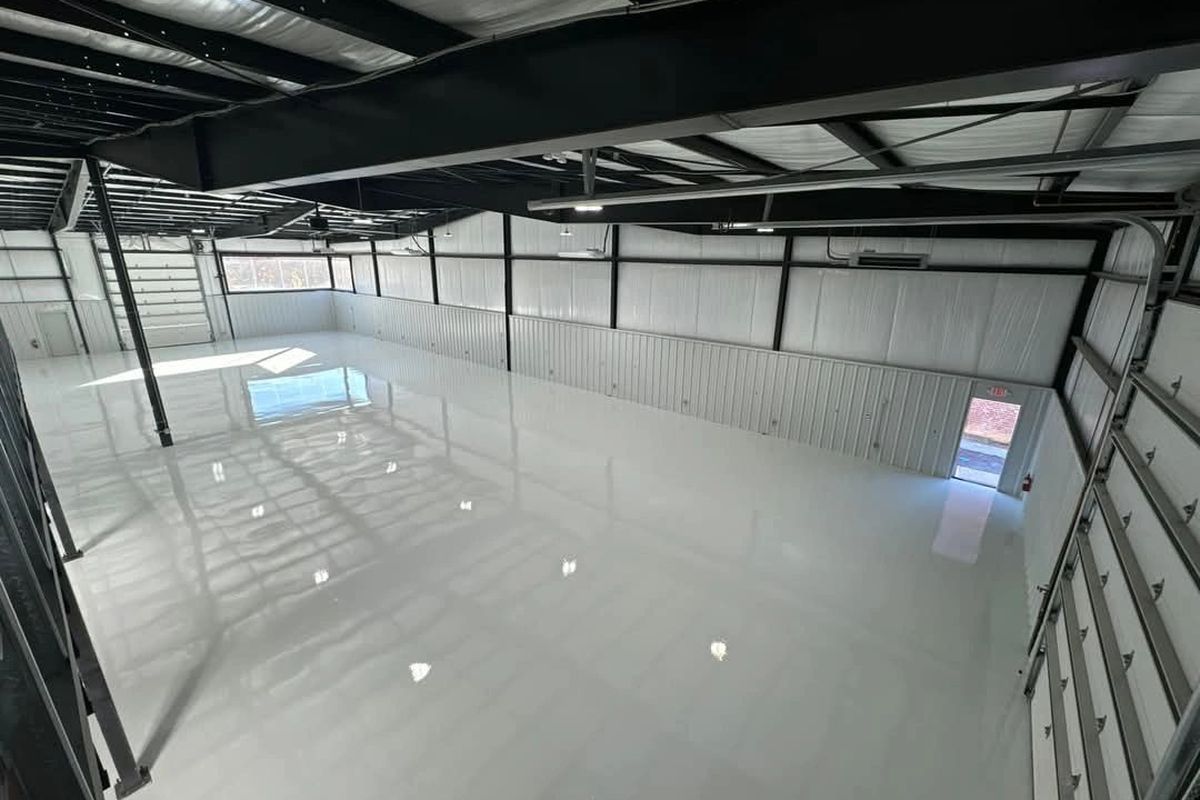
The photo is an example finish, not a documented Arlington job.
Arlington garages can have older concrete beside newer additions, so a floor should be assessed in sections rather than assumed to be uniform. Oil, tire residue, paint, curing compounds, and weak surface paste can all interfere with adhesion. Diamond grinding removes surface material and creates a consistent profile for bonding. Acid etching is not a substitute for mechanical preparation when a coating system requires a prepared concrete profile.
A slab that looks dry may still release moisture vapor. Calcium chloride testing measures moisture emission at the surface, while in-situ relative humidity testing measures conditions inside the concrete. The appropriate method and limits depend on the coating manufacturer’s instructions. Testing before installation helps identify whether the planned system is suitable or whether moisture control or a different approach is needed.
Cracks and control joints need separate decisions. A contractor should identify whether a crack appears stable and explain how it will be filled or treated. Control joints are designed to accommodate movement, so simply coating over them can lead to a visible line or failure. Ask whether joints will remain visible, be filled, or receive a treatment specified for that coating system.
A complete coating is a sequence, not just a topcoat. Depending on the system, the work may include a primer, a pigmented base coat, a full or partial flake broadcast, and a protective topcoat. Ask what each layer does and how the crew will prepare the surface between coats. For a flake floor, confirm how excess flake is removed and how the final texture is made consistent.
Summer heat can shorten working and recoat windows, while cooler conditions can slow curing. The installer should check both air and slab temperatures, along with humidity, against the product’s stated limits. The schedule should allow each coat to cure as required before the next step. Ask when foot traffic, stored items, and vehicle traffic can return; those milestones may not be the same.
For areas exposed to sunlight at an open garage door, ask how the proposed topcoat handles UV exposure. Some coating chemistries can amber or change color over time. A smooth finish may also become slick when wet, so discuss traction and cleaning needs before choosing the texture. Regular sweeping and prompt cleanup of oil or other spills help keep the finished surface easier to maintain.
Compare the preparation and layer schedule, not only the coating name or total area. Ask whether the quote includes moisture testing, diamond grinding, crack and joint work, primer, flake coverage, and a topcoat. Have the contractor list exclusions and explain how unexpected slab damage or moisture results would change the scope.
Not necessarily. A surface can feel dry before the coating has reached the cure needed for vehicle loads, hot tires, or chemical exposure. Follow the installer’s written return-to-service schedule for the exact system and installation conditions. Avoid moving heavy items onto the floor during cure unless the installer approves it.
The result should be reviewed against the selected system’s published limits. Depending on the findings, the installer may recommend a moisture-control layer, a different coating approach, or postponing the work. Do not assume an ordinary primer will solve a moisture problem; ask for the proposed remedy and its installation requirements in writing.
Flakes can make small surface variations less noticeable, but they do not repair moving cracks or stabilize concrete. The crack still needs to be assessed and treated as part of the preparation plan. Ask the installer what may remain visible after coating and how movement could affect the finish later.
Use a soft broom or dust mop for grit, then wash with a mild cleaner that the coating installer approves. Avoid abrasive pads and unapproved solvents, which can dull or mark the finish. Wipe up oil and other spills rather than letting them sit, and ask how to handle any stubborn tire marks.
Tell us about the floor in Arlington. A photo and a rough size are enough to start a written estimate. No street address on our side — local pros come to the slab.
Dallas–Fort Worth Epoxy Floors is an independent referral service that connects you with local epoxy flooring pros.
 DFW