← Dallas–Fort Worth Epoxy Floors
Irving houses need the same hot-tire garage floor as the rest of the mid-cities. Las Colinas and the warehouse-adjacent suites sometimes need a commercial coat on a calendar the landlord wrote. Those are different mobilizations.
Say if the floor is a residence or a suite with a loading door. A flake color that looks right in a garage can be the wrong sheen next to a showroom window.
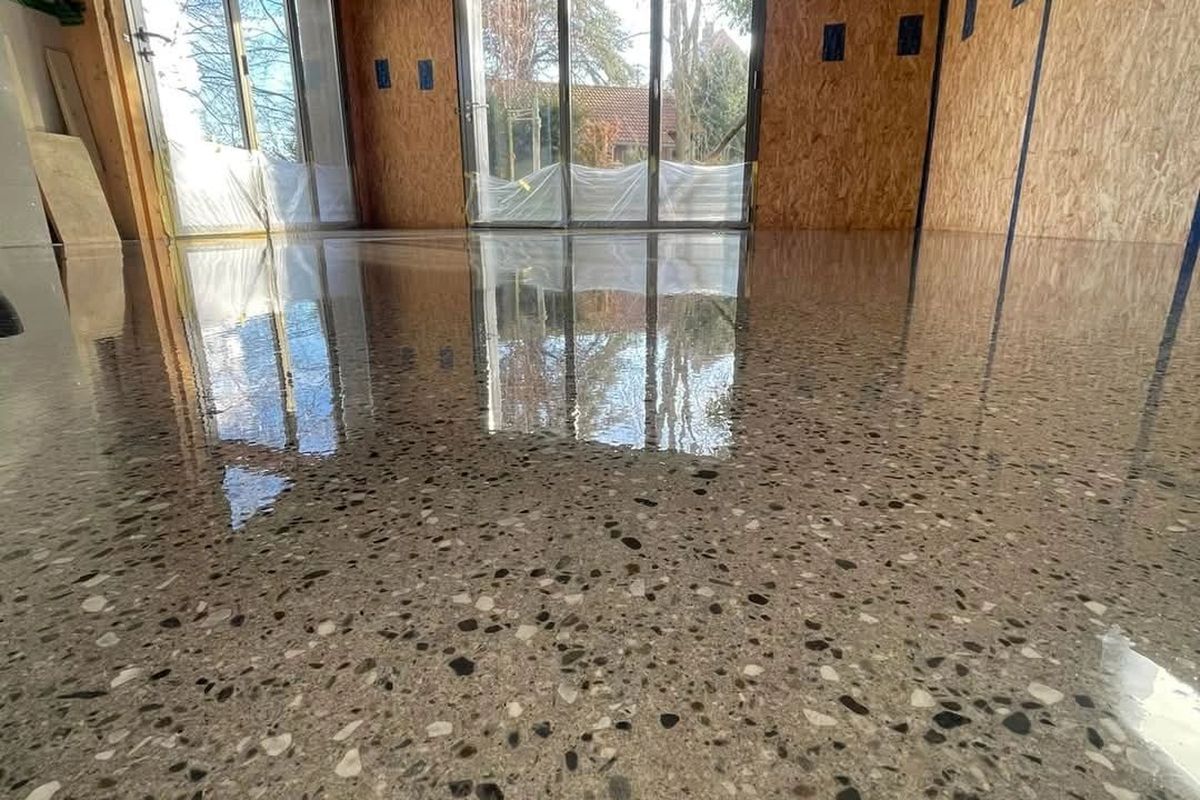
The photo is an example finish, not a documented Irving job.
In a home garage, the coating can only hold as well as the concrete beneath it. Oil, tire residue, old sealer, and paint can interfere with adhesion even when the floor looks clean. Diamond grinding removes contaminants and opens the surface to a specified concrete surface profile, or CSP. Acid etching is less controlled and may leave residue or an uneven profile, so ask how the slab will be prepared.
A slab that looks dry can still transmit moisture vapor. Calcium chloride testing measures moisture emission at the surface; in-situ relative humidity testing measures conditions inside the concrete. They are different methods, and the coating system’s instructions determine which test is appropriate and what results it can accept. Ask for the test method and results before installation, especially if the slab has had water exposure or recent rain nearby.
Cracks and control joints need separate decisions. A contractor should identify whether a crack appears stable or is still moving, then explain whether it will be filled, treated, or left visible. Control joints are intentional movement points and are often maintained through the coating rather than rigidly bridged. A repair may make a crack less noticeable, but it cannot guarantee the concrete will never move again.
A suite with a loading door has different demands from a private garage. Tell the estimator what rolls across the slab, how often the floor is cleaned, and whether carts or equipment turn in place. Those details affect the needed coating build and wear layer. A thin decorative finish may not suit repeated abrasion, while a heavier system can be unnecessary for light foot traffic.
Ask what each layer does, not just what the system is called. A typical build may include prepared concrete, a primer where specified, a base coat, decorative flake if selected, and a protective topcoat. With full flake, installers broadcast the flakes, then remove loose material before sealing. The quote should say how joints and repaired cracks are handled and what surface will be left at edges and thresholds.
Sunlight near windows can change how a finish looks over time. Many epoxy finishes can amber with UV exposure; UV-stable topcoats can help reduce that change, but ask what the selected system can and cannot prevent. Also discuss slip resistance and cleaning needs. Temperature and humidity affect application and recoat windows, so confirm the installer will follow the system’s limits and leave time for cure before use.
Yes. A dry-looking surface does not establish that moisture vapor is within a coating’s limits. Ask whether calcium chloride or in-situ relative humidity testing fits the proposed system, and request the results. If readings exceed the system’s limits, the contractor should explain options before coating rather than relying on appearance alone.
They can coat across them, but rigidly filling or bridging a working joint may lead to cracking as the slab moves. Ask whether the joints will remain visible, be filled with a flexible material, or receive another treatment. The right detail depends on the joint and the coating system.
There is no single wait time for every installation. Temperature, humidity, coating thickness, and the selected materials affect cure. Get separate written guidance for foot traffic and vehicle traffic, and do not treat a surface that feels dry as ready for hot tires. Follow the installer’s system-specific instructions.
A smooth topcoat can have limited traction when water, dust, or residue is present. Ask what slip-resistance options are compatible with the finish and how they change texture and cleaning. The goal is to match traction to the space, since a more textured surface may take more effort to clean.
A UV-stable topcoat can reduce yellowing or color change, but it does not make every coating immune to sunlight. Ask which layer is exposed to UV and what appearance change is possible over time. This matters when a suite has daylight near the coated floor or a garage door stays open.
Tell us about the floor in Irving. A photo and a rough size are enough to start a written estimate. No street address on our side — local pros come to the slab.
Dallas–Fort Worth Epoxy Floors is an independent referral service that connects you with local epoxy flooring pros.
 DFW