← Dallas–Fort Worth Epoxy Floors
North McKinney slabs are young. Local pros ask when they were poured before they schedule a decorative coat. Near the square, older garages have cracks, paint, and oil, and the prep is the whole job.
Both still face a Texas driveway. Hot-tire resistance matters more than which subdivision name is on the stone entry.
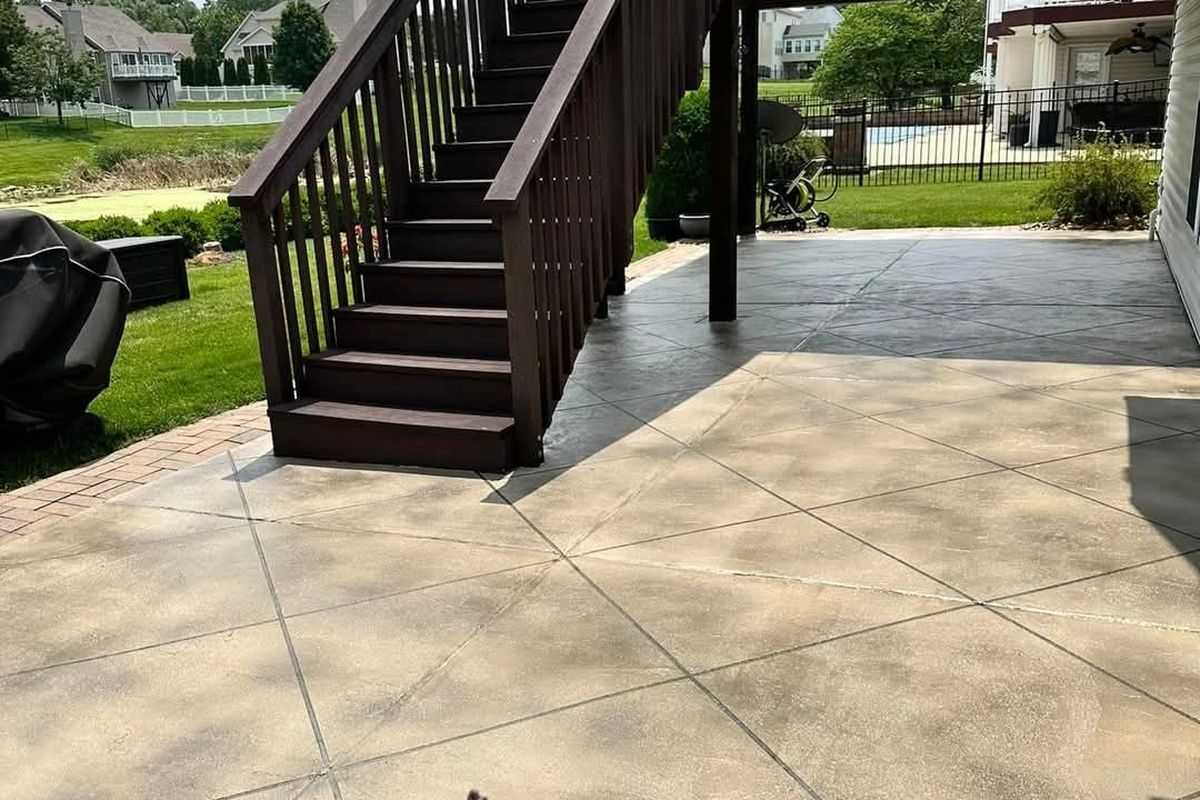
The photo is an example finish, not a documented McKinney job.
In north McKinney, a newer-looking garage floor still needs a readiness check before coating. Concrete can retain moisture after it appears dry, and a coating may trap that moisture. Ask whether the installer will test the slab using a method accepted for the proposed system. Calcium chloride testing measures moisture leaving the surface; in-slab relative humidity testing measures conditions within the concrete. Results should be compared with the coating maker’s limits.
A pour date is useful context, but it does not prove a slab is ready. Cure time, weather, slab thickness, and moisture conditions all matter. A contractor should explain what test will be used, where readings will be taken, and what happens if results exceed the system’s limits. If testing or preparation is skipped, a decorative finish can fail even when the concrete looks clean and sound.
Older garages near the square may need a different preparation plan where paint, oil, or previous repairs remain. Diamond grinding removes coatings and opens the concrete to create a consistent texture, often described by a concrete surface profile, or CSP. Acid etching is not an equal shortcut: it can leave residue, miss contamination, or produce uneven texture. The finished surface should be checked before primer goes down.
Cracks and control joints are not all the same. A stable crack may be routed and filled with a compatible repair material, then blended into the floor. A control joint is designed to accommodate concrete movement, so filling or coating across it without a plan can lead to a visible split. Ask the contractor to mark which lines will be repaired, which will remain, and how each will look after coating.
A complete system has distinct layers, each with a job. Primer helps bond to prepared concrete; the base coat holds the finish; flakes, when used, are broadcast into that coat; and a compatible topcoat seals the surface. Ask which layer is included in the quote and how the installer handles missed flakes, edges, and floor-to-wall transitions. Those details affect both appearance and protection.
For an exposed garage, ask how the chosen topcoat handles sunlight coming through the open door and hot tires after driving. Some resin finishes can amber or change color with UV exposure; resistance varies by chemistry and formulation. A polyaspartic or polyurea topcoat may be selected for particular cure or exposure needs, but it must be compatible with the full system and installed within its temperature and humidity limits.
Dark spots, a slick feel, or water that beads unusually can be clues, but appearance alone cannot confirm contamination. Ask the installer how they will test suspect areas and remove oil before coating. Simply grinding over residue can spread it into the slab and undermine adhesion, so the preparation plan should address the source, not just the surface.
No. A coating can make a repaired crack less noticeable, but it cannot guarantee that a moving crack will stay invisible. Concrete can continue to shift, and a rigid finish may reflect movement as a new line. Have the installer identify active cracks and explain whether repair, flexible treatment, or leaving the line visible is the appropriate approach.
Ask what the topcoat’s UV resistance means for the color and gloss you selected, and whether the system is intended for that exposure. Epoxy and other coating chemistries do not all respond to sunlight the same way. A written system description is more useful than a general promise that a floor will not change color.
The answer depends on the coating system, slab and room conditions, and the installer’s cure schedule. Ask for separate return-to-foot-traffic and vehicle-traffic times, and follow them even if the surface feels dry. Parking too soon can leave tire marks, cause pickup, or damage a finish that has not reached the required cure.
Use a soft broom or dust mop for grit, then clean with a mild product approved for the coating. Rinse away cleaner residue and avoid abrasive pads or harsh chemicals unless the system’s care instructions allow them. Promptly wiping up oil and other spills also helps keep the surface easier to maintain.
Tell us about the floor in McKinney. A photo and a rough size are enough to start a written estimate. No street address on our side — local pros come to the slab.
Dallas–Fort Worth Epoxy Floors is an independent referral service that connects you with local epoxy flooring pros.
 DFW