← Dallas–Fort Worth Epoxy Floors
Carrollton’s established neighborhoods are full of garages with a failed paint layer and a crack the clay opened years ago. Local pros grind the paint off and fill the crack if it is stable. If it is still moving, local pros say so before you pick a color.
These are working family garages, hot in the afternoon. The floor needs to take a tire, a bike, and a trash bin, which is an argument for flake rather than a high-gloss solid that shows every scuff.
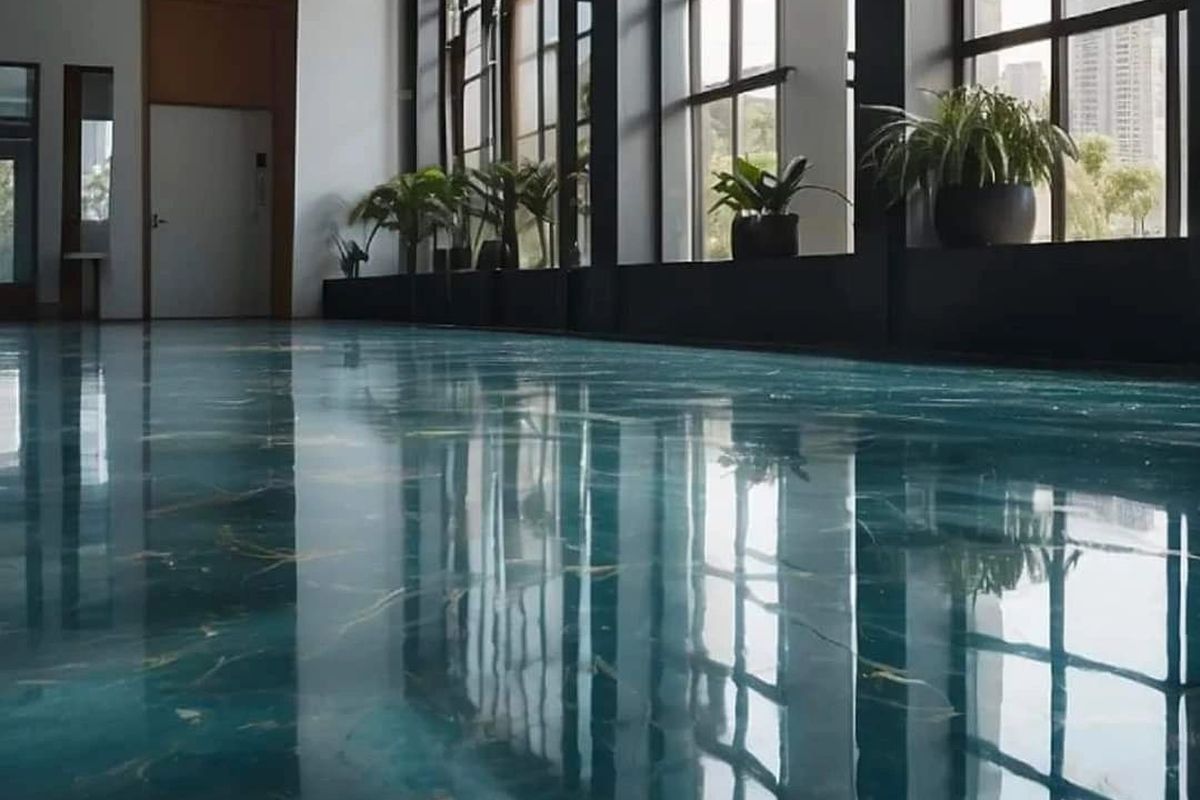
The photo is an example finish, not a documented Carrollton job.
In an established Carrollton garage, a painted floor can hide more than worn color. Peeling may point to weak adhesion, while dark areas or residue can signal contamination. A sound-looking slab can also carry moisture from below. Before choosing a finish, the installer should inspect the concrete and identify what is on it; coating over a problem usually makes the next failure harder to correct.
Moisture should be checked with a method suited to the slab and the coating system. Calcium chloride tests measure moisture vapor emission at the surface; in-situ relative humidity probes measure conditions inside the concrete. Neither result is useful without the product’s published limits and the installer’s test conditions. A primer or moisture-control layer is appropriate only when the system calls for it and the slab meets its requirements.
For a garage with old paint, ask how the crew will remove it and prepare the concrete. Diamond grinding can take off coating and create a consistent surface profile, often described using CSP grades. Acid etching does not reliably remove paint or create an even profile, and residue can interfere with bonding. The prepared slab should be checked for clean, sound concrete before the coating layers go down.
Cracks and joints need separate decisions. A stable crack may be filled with a repair material compatible with the coating, then ground flush. A control joint is intended to manage slab movement, so filling it rigidly and coating across it can lead to a visible crack or split later. Ask which lines will be repaired, which will remain visible, and how the finish will meet the garage edges.
A flake floor is a layered system, not just colored chips under clear resin. The installer applies a base coat, broadcasts flake to the specified coverage, removes loose material after cure, and seals the surface with a topcoat. Polyaspartic or polyurea top coats can suit fast-turnaround jobs, but installation still depends on product-specific temperature, humidity, and recoat limits. Ask how the crew will control those conditions on a hot afternoon.
Topcoat choice affects how the floor looks and behaves. Some coatings can amber with ultraviolet exposure, so ask about UV stability if sunlight reaches the garage opening. Texture can improve traction, but more texture may hold dirt and make cleaning harder. After installation, follow the stated return-to-foot-traffic and vehicle-cure times; early parking can cause hot-tire pickup. Sweep grit and use a mild cleaner rather than harsh chemicals unless the system maker approves them.
Usually the paint must be removed where it is loose, incompatible, or prevents proper bonding. A contractor should test the existing layer and explain the removal plan before coating. If paint remains in isolated areas, ask how those spots will be feathered and how the prepared concrete will be checked for adhesion.
Compare the scope, not only the final coating name. Ask whether the estimate includes removal of old paint, diamond grinding, crack and joint treatment, moisture testing, each coating layer, and cleanup. Confirm what is excluded, how application conditions will be monitored, and when the floor can take foot traffic and parked vehicles.
A coating cannot stop the slab from moving. A repair may hide a stable crack, but an active crack or control joint can reflect through the finished surface. The contractor should distinguish between the two, describe the repair material and treatment, and explain whether the line will remain visible or be allowed to move.
Temperature and humidity affect working time, adhesion, and cure. Conditions at the slab can differ from the air, especially during a hot day or after rain. The coating manufacturer sets limits for application and recoat timing; ask how the crew will measure conditions and what happens if they fall outside those limits.
The answer depends on the complete coating system and the conditions during installation. Foot traffic may be allowed before vehicle traffic, but the stated cure time for parked cars should be followed. Ask for those timings in writing and avoid turning tires or leaving a hot vehicle on the floor before the system is ready.
Tell us about the floor in Carrollton. A photo and a rough size are enough to start a written estimate. No street address on our side — local pros come to the slab.
Dallas–Fort Worth Epoxy Floors is an independent referral service that connects you with local epoxy flooring pros.
 DFW